
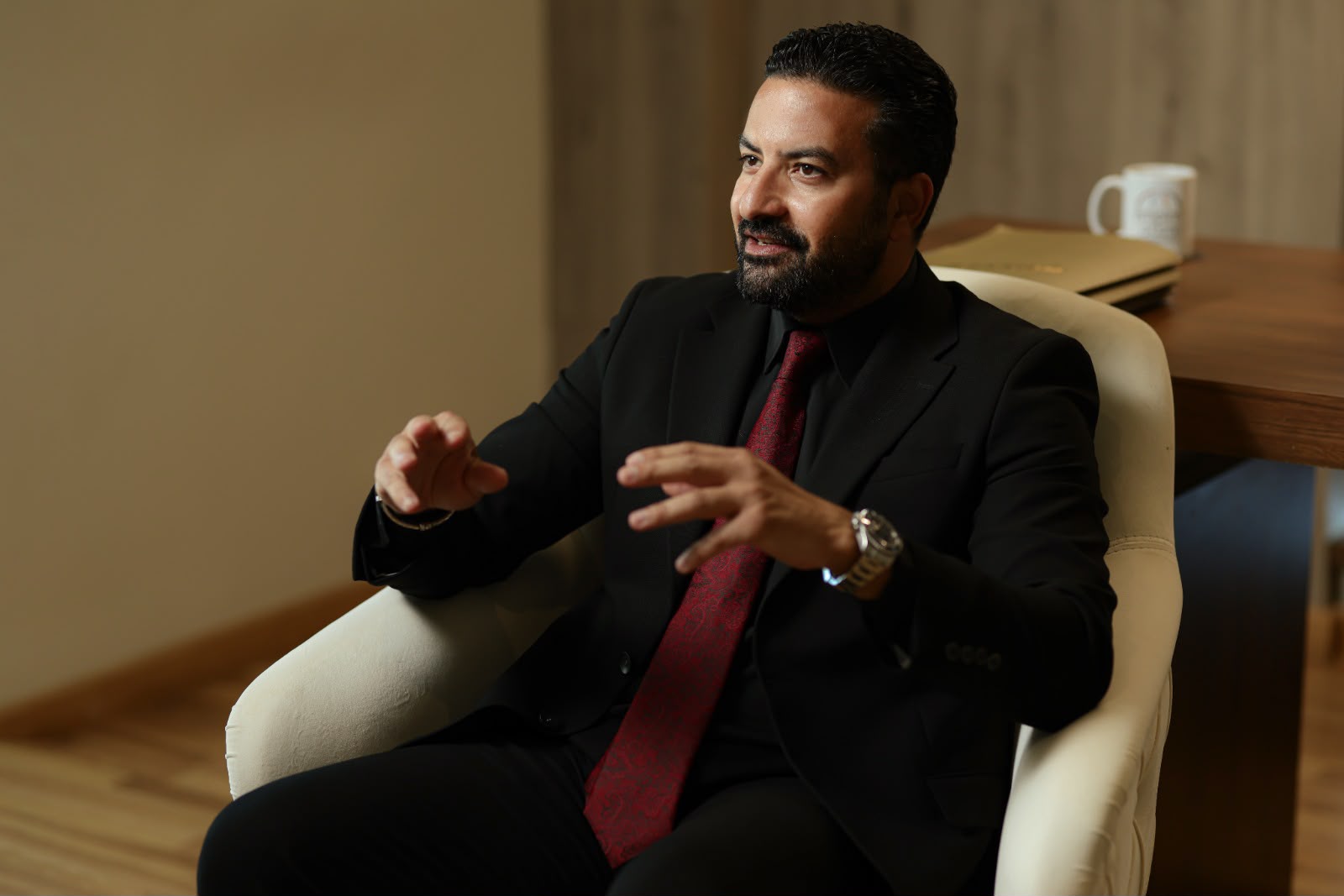
Moustafa Mohsen, Chairman of Empire State Developments, affirmed that the Egyptian real estate market remains strong and is among the most significant real estate markets in the region, despite the regulatory phase currently underway.
He explained that the substantial expansion in cities and real estate projects over recent years has increased the number of developers and projects, making market regulation a natural and necessary step following a period of rapid growth.
Speaking to television presenter Taher Hamdy on the Aqar Misr program, broadcast on Al-Nahar TV, Mohsen highlighted the continued demand for real estate in Egypt, stressing that the market is undergoing a phase of restructuring rather than experiencing a recession.
Egypt’s Real Estate Market Enters a New Phase of Regulation
Mohsen explained that Egypt has witnessed substantial urban expansion in recent years, with new cities and urban extensions emerging across several governorates. This development has coincided with an increase in the number of companies operating in the real estate sector and the volume of projects being offered to customers.
He emphasized that the growing number of real estate projects does not necessarily indicate an oversupply of units or declining demand. Given Egypt’s population size and continued growth, the market still requires additional residential units, while the main change lies in the wider range of options available to buyers.
The Chairman of Empire State Developments added that declining sales during certain periods should not automatically be interpreted as evidence of a market recession. Instead, these fluctuations reflect a natural phase of restructuring and market regulation following years of rapid expansion.
He noted that the significant growth of Egypt’s urban areas over the past decade, combined with the accelerated pace of project development, has created a need to regulate market mechanisms and strengthen the organization of real estate activities.
Rising Construction Costs Put Pressure on Real Estate Projects
Addressing delays affecting some real estate projects, Mohsen explained that monitoring approximately 16,000 projects, of which between 500 and 600 have experienced delays, does not mean that the affected projects are concentrated in a particular geographical area. Delays have been recorded across several locations, including the North Coast, the New Administrative Capital, and New Cairo.
He stressed that project delays are not necessarily attributable to a lack of commitment by developers. In many cases, companies have been affected by significant fluctuations in exchange rates and sharp increases in construction material prices over recent years.
Mohsen explained that some developers launched projects in 2021 and 2022 based on construction costs that differed considerably from the expenses incurred during implementation. Since real estate projects typically require an average of four years to complete, increases in raw material and energy prices have placed substantial pressure on the feasibility studies and cost calculations prepared at the beginning of these projects.
He added that developers have continued to honor the prices stipulated in their contracts with customers despite the rising cost of implementation. This has resulted in significant financial losses for some companies, particularly those whose projects were launched before the sharp increases in construction costs.
Prioritizing Project Completion Over New Launches
Mohsen stressed that addressing the challenges facing the real estate sector requires a balance between sales and actual implementation, rather than focusing exclusively on generating new sales.
He explained that completing existing projects and accelerating construction progress should be the main priorities during the current phase. Available financial resources should be directed toward implementation, even if this requires postponing the launch of new projects or delaying the acquisition of additional land until ongoing developments are completed.
The Chairman of Empire State Developments noted that some developers are managing several projects simultaneously, including developments launched when construction costs were significantly lower than current levels. In certain cases, companies have pursued new projects to generate the liquidity needed to support the completion of their existing developments.
He linked these pressures to the limited availability of direct bank financing for real estate development companies, explaining that developers generally face restrictions in accessing financing before delivering units and beginning to collect payments from customers. This increases the financial burden on companies during the construction phase.
Proposed Solutions to Support Developers and Delayed Projects
Mohsen stated that the challenges facing the Egyptian real estate market could create an opportunity to introduce new financing mechanisms and practical solutions, particularly for companies experiencing difficulties because of rising costs rather than a lack of commitment to their projects.
He noted that discussions are underway regarding mechanisms to address the challenges facing developers and delayed projects, expressing optimism that solutions could emerge to support financially viable companies and help ensure the completion of ongoing developments.
Among the proposed solutions, Mohsen highlighted the possibility of bringing in additional developers to participate in selected projects, expanding access to bank financing for real estate companies, and increasing the state’s involvement where appropriate.
He also pointed to the potential for reviewing land installment payment periods or reducing certain interest charges associated with land payments, measures that could ease financial pressures and help developers maintain construction schedules.
Buyers Become More Selective in Choosing Real Estate Projects
Mohsen highlighted a significant shift in customer behavior, explaining that buyers have become more informed and increasingly capable of researching developers and projects before making purchasing decisions.
He noted that customers are no longer focused solely on acquiring residential, commercial, or administrative units. Instead, they increasingly evaluate project locations, developer reputations, investment potential, and the ability of developments to meet their future needs.
Actual construction progress has also become a key consideration for buyers, according to Mohsen. The commencement of construction and visible progress on the ground play an important role in building trust and strengthening credibility between developers and customers.
He added that this growing awareness is encouraging developers to pay closer attention to execution quality and transparency, as buyers increasingly seek tangible evidence of a project’s progress before committing their money.
New Administrative Capital Represents a Major Urban Development Project
Commenting on the New Administrative Capital, Mohsen described it as a national project that has become a tangible reality following substantial development over recent years.
He noted that some foreign investors who visited the capital expressed positive impressions of the scale of urban development and the projects already established there, adding that the city still has further stages of development ahead.
Mohsen highlighted the range of national projects and major institutions located in the New Administrative Capital, including ministry and government headquarters, the Parliament building, and the Opera House, alongside developments undertaken by private real estate companies.
He described the capital as a significant step forward in Egypt’s urban development, with the potential to reshape the country’s urban landscape and create new opportunities for investment and economic activity.
More Than 30 Years of Experience in Contracting and Real Estate Development
Mohsen revealed that his experience in the construction and real estate sector spans more than 30 years. He began his professional career in contracting and finishing before expanding into real estate development.
He explained that the real estate development company he established in 2020 represented an extension of his previous experience in contracting and finishing. The group also includes a wood factory and a contracting and finishing company, with each business activity complementing the others.
Mohsen emphasized that direct supervision of construction sites is a fundamental element of his management approach. He explained that regularly monitoring project details and following up on construction progress helps identify potential problems at an early stage and address them before they develop into major challenges.
Mohsen’s Advice to Real Estate Buyers: Focus on Needs and Developer Credibility
Offering advice to prospective buyers, Mohsen stressed that purchasing decisions should be based primarily on individual needs and investment objectives rather than on whether a particular moment is considered the ideal time to buy.
He explained that land prices, construction costs, energy expenses, and potential disruptions to import supply chains may influence the cost of implementing future projects. These factors make it important for buyers to carefully evaluate available opportunities and the credibility of the companies behind them.
Mohsen noted that purchasing a unit in a well-planned project developed by a reputable company may represent an opportunity worth considering, provided that buyers conduct thorough research into the developer, the project, and its actual implementation progress.
He added that buyers can also benefit from the expertise of real estate marketing companies and specialized professionals to compare available projects and identify the options that best suit their circumstances, whether the objective is residential use or investment.
Mohsen concluded by emphasizing that the Egyptian real estate market continues to offer opportunities, while its current regulatory phase highlights the importance of responsible development, sound financial planning, transparent execution, and stronger confidence between developers and customers.