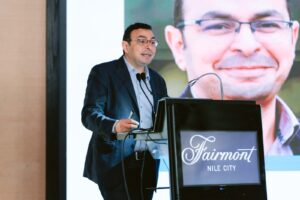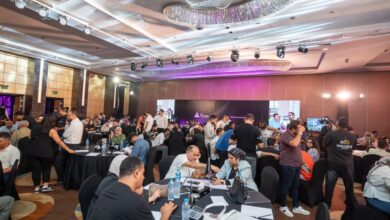
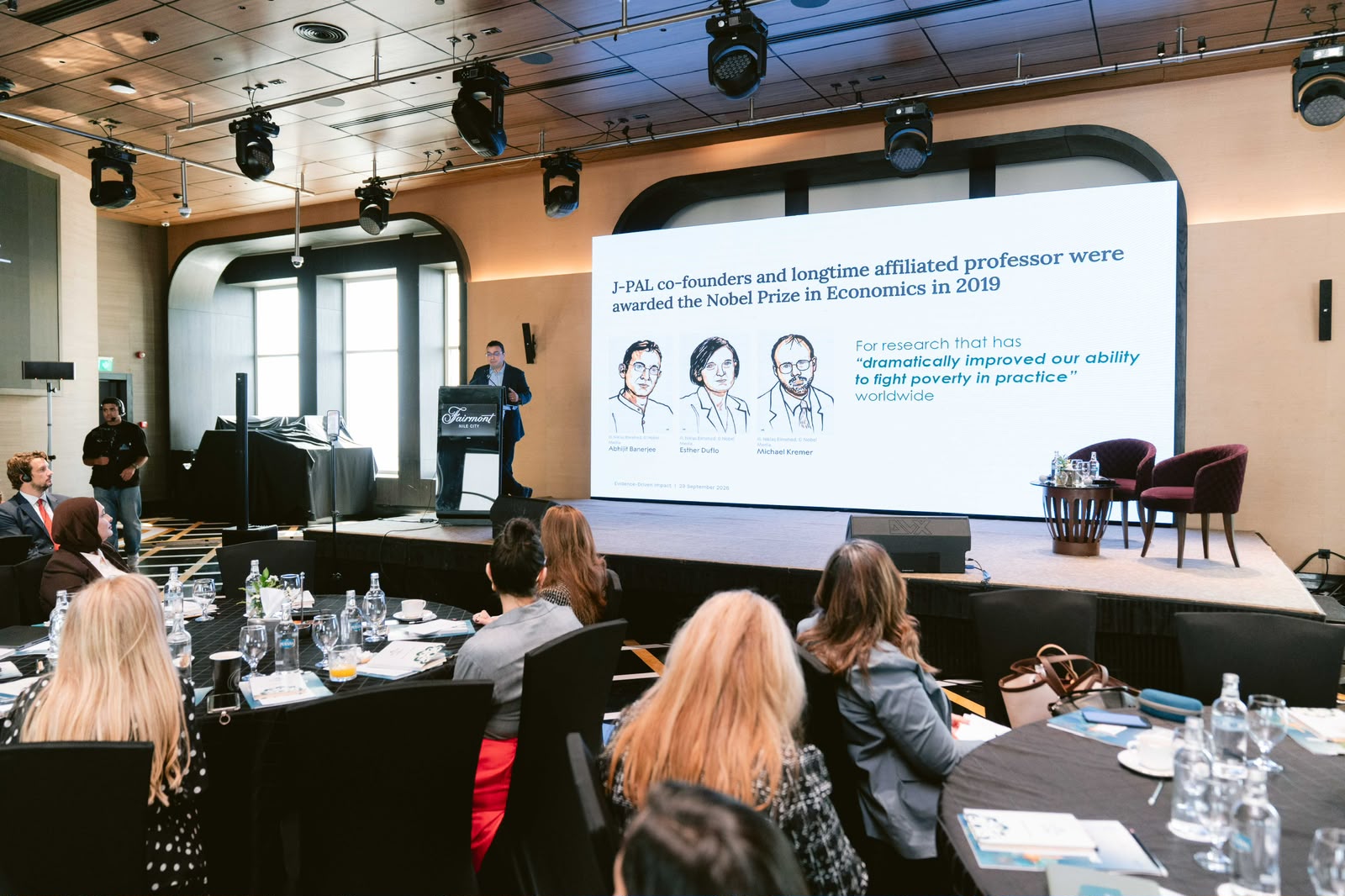
The Sawiris Foundation and the Abdul Latif Jameel Poverty Action Lab Middle East and North Africa (J-PAL MENA) at the American University in Cairo (AUC) convened business and banking leaders, development and donor organizations, researchers and development experts to discuss how evidence and impact measurement can help direct social investment toward more effective and sustainable development solutions.
The discussion took place during the “Evidence-Driven Impact” convening in Cairo, which focused on strengthening the use of research, evaluation and measurable outcomes in social investment and development decision-making.
Shifting the Focus From Spending to Measurable Impact
Participants emphasized the importance of moving beyond traditional measures of social investment, such as the amount of funding allocated or the number of beneficiaries reached, toward assessing the actual outcomes achieved, the sustainability of those outcomes and the efficiency with which resources are used.
The discussions also highlighted the value of collaboration among the private sector, development organizations, research institutions and government entities. Such partnerships can combine financing, technical expertise, research and implementation capabilities to test effective solutions and support their expansion.
The convening examined practical approaches that companies, banks and donor organizations can adopt to make evidence a more integral part of their social investment strategies.
Sawiris Foundation Highlights Evidence-Based Development Experience
During the event, the Sawiris Foundation presented its experience in applying evidence, evaluation and continuous learning to strengthen its development programs.
The Foundation explained how research and measurement can be used to identify interventions that are delivering the expected results, improve programs that require further development and build on approaches that demonstrate effectiveness.
The Bab Amal Program was presented as an example of this approach. The program combines economic and social support, livelihood development and intensive household follow-up, while using research and evaluation findings to continuously refine its implementation model.
According to the Foundation, the program has so far reached approximately 14,000 families and contributed to a three- to fourfold increase in the value of household assets after 40 months. The experience illustrates how evidence and data can contribute to stronger program design, improved implementation and more sustainable development outcomes.
Government, Private Sector and Civil Society Participate
The convening brought together representatives from a wide range of institutions involved in Egypt’s development sector.
Representatives of the Ministry of Social Solidarity included Engy El Yamany, Executive Director of the Rural and Environmental Industries Support Fund (REIS), and Reem Abdel Latif, Monitoring and Evaluation Consultant for the Takaful and Karama Cash Transfer Program.
Their participation contributed government perspectives to discussions on improving the effectiveness and measurement of social and development investments.
An open panel discussion also brought together representatives from the private sector and civil society, including Mariam Allam, Founder and Board Member of the Essam & May Allam Foundation for Sustainable Development; Shams Owais, Government Relations and Partnerships Director for North Africa, the Levant and Türkiye at Mars; Nahla Mokhtar Agour, Corporate Affairs, Engagement & Sustainability Director at L’Oréal Egypt; and Manal Hassan, Group Chief Sustainability Officer at Elsewedy Electric.
The panel examined how businesses and civil society organizations can use partnerships, resources and institutional knowledge to strengthen social impact.

J-PAL MENA Presents the Role of Research in Development Decisions
J-PAL MENA presented research and evaluations covering a range of development sectors, highlighting how regional and international evidence can support institutional decision-making.
The sessions focused on narrowing the gap between research and implementation and on translating research findings into practical tools that organizations can use when designing programs and making social investment decisions.
Laila Hosny, Executive Director of the Sawiris Foundation, said that growing development needs and limited resources make it increasingly important to direct funding toward interventions that can deliver meaningful results.
She noted that the Foundation uses evidence and measurement as an integral part of its decision-making process to determine what is producing results, identify areas for improvement and assess opportunities for scaling effective approaches.
Hosny also emphasized that partnerships can bring together complementary capabilities, including implementation experience, research, financing, technology and the capacity to scale successful models.
Scientific Evidence as a Tool for More Effective Investment
Ahmed Elsayed, Executive Director of J-PAL Middle East and North Africa, highlighted the role of scientific evidence in determining whether social programs are achieving their intended outcomes.
He explained that J-PAL’s impact evaluations use rigorous scientific methodologies, particularly randomized controlled trials, to examine not only whether a program works, but also why it works, for whom it works and at what cost.
According to Elsayed, integrating reliable scientific evidence into the design and funding of social programs can help institutions use their resources more effectively while making development outcomes more measurable and scalable.
Practical Steps Toward Evidence-Based Social Investment
The convening concluded with a discussion of practical measures that institutions can adopt to integrate evidence more systematically into their decision-making processes.
These measures include clearly defining the development problem before selecting an intervention, reviewing existing research and previous implementation experience, establishing measurable outcome indicators, monitoring implementation and using lessons learned to improve future programs.
The “Evidence-Driven Impact” convening is part of the ongoing collaboration between the Sawiris Foundation and J-PAL MENA to promote the use of research and evaluation in development practice, strengthen the connection between knowledge and implementation, and support institutions in directing resources toward interventions with demonstrated potential for effectiveness and scalability.

The Sawiris Foundation is one of Egypt’s first philanthropic development foundations. Established in 2001 with funding from the Sawiris family, the Foundation supports development solutions aimed at reducing multidimensional poverty and expanding opportunities for underserved individuals and communities.
Its work covers education, economic and social empowerment, quality of life, and support for Egypt’s cultural and artistic landscape. Over the past 25 years, the Foundation has developed experience in designing, funding and scaling development models in cooperation with government institutions, the private sector, civil society and international organizations.
The Abdul Latif Jameel Poverty Action Lab Middle East and North Africa (J-PAL MENA) at the Onsi Sawiris School of Business at the American University in Cairo was established in July 2020 as part of J-PAL’s global network of research centers.
J-PAL works to reduce poverty by promoting policymaking informed by scientific evidence. Its global network includes more than 411 affiliated professors from leading universities worldwide and conducts and synthesizes evidence from randomized evaluations addressing key development challenges.
J-PAL also works with governments, nongovernmental organizations, donors and other stakeholders to share research findings, support the scaling of effective programs and strengthen evidence-informed decision-making.
Founded in 1919, the American University in Cairo (AUC) is a U.S.-accredited, English-language institution of higher education and a major center for intellectual, social and cultural activities in the Arab world.
The university offers undergraduate, master’s and doctoral programs and emphasizes liberal arts education, research, critical thinking and innovative approaches to regional and global challenges.