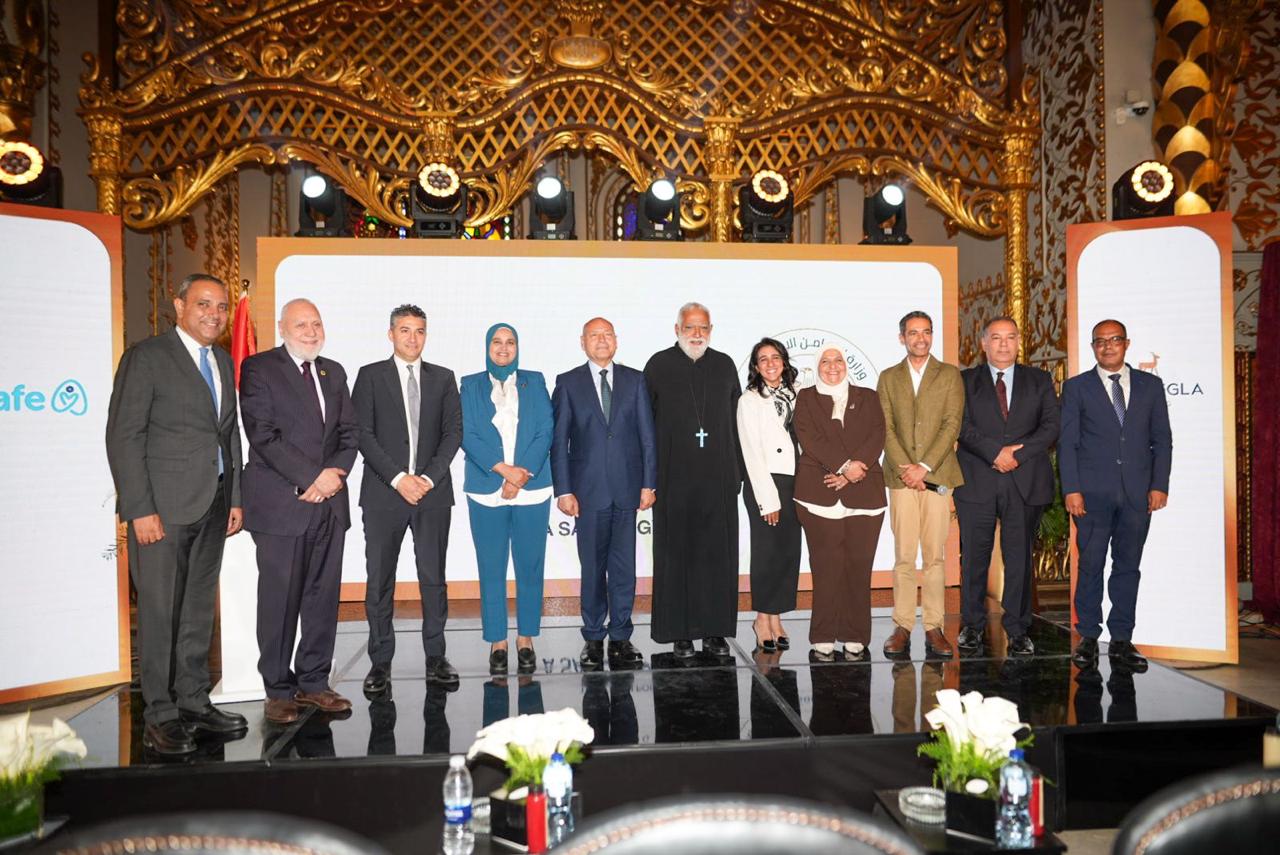
Wadi Degla, in partnership with Safe Egypt Foundation, has announced the launch of the second phase of the Safe Shield Program, a community protection initiative designed to strengthen child protection, promote mental wellbeing, and create safer environments for children and families across Egypt.
The announcement was made during a special event attended by representatives from government ministries, public institutions, experts, specialists, and public figures. The new phase follows the success of the program’s first stage, which was implemented in 55 institutions across four governorates and helped establish safer and more supportive environments for children and caregivers.
Under the second phase, the program will expand to more than 75 institutions, including 10 youth centers across multiple governorates, significantly increasing its impact on child safety and community protection nationwide.
Wadi Degla Integrates Child Protection into Its Sustainability Strategy
The Safe Shield Program forms part of Wadi Degla’s broader vision for community sustainability and human development. The company’s approach extends beyond real estate development and sports services to include investing in families, empowering communities, and supporting future generations.
Leveraging its network of clubs across Egypt, Wadi Degla has integrated the initiative into its institutional framework to promote best practices in child protection, family support, and community wellbeing. The goal is to build a comprehensive system that creates safe environments where children can thrive and contribute positively to sustainable development.
This vision reflects the belief that true investment is measured not only by infrastructure and facilities but by the development and empowerment of people.
Wadi Degla: Child Protection Is a Developmental and Economic Priority
Commenting on the partnership, Dr. Raymond Ahdy, CEO of Wadi Degla, said the company seeks social responsibility initiatives that align with its mission of supporting Egyptian families and creating long-term societal impact.
He emphasized that the collaboration with Safe Egypt Foundation and the development of the Safe Shield Program stem from a shared conviction that protecting children is an investment in Egypt’s future.
According to Ahdy, child protection extends beyond social responsibility and represents a critical developmental and economic issue. He noted that unsafe childhood experiences can negatively affect cognitive development, educational achievement, and future productivity.
He cited World Bank estimates indicating that exposure to violence during childhood can reduce lifetime productivity by as much as 14%, while the global economic cost of violence against children is estimated at approximately 8% of GDP. Violence in schools alone is believed to result in nearly $11 trillion in lost future earnings worldwide.
“With nearly 60% of Egypt’s population under the age of 30, protecting children is an urgent national priority directly linked to educational outcomes, economic productivity, and long-term social stability,” Ahdy said.
Safe Shield Equips Teachers, Caregivers and Families with Practical Protection Tools
The Safe Shield Program aims to empower teachers, nursery caregivers, sports coaches, and families with practical skills and knowledge that help protect children psychologically and behaviorally.
The initiative focuses on preventing abuse, neglect, and bullying while promoting awareness of children’s rights, emotional expression, and psychological care. Through targeted training and capacity-building programs, participants learn how to create supportive educational and family environments that foster healthy child development and mental wellbeing.
First Phase Reached More Than 32,000 Children and Families
Sara Aziz, Founder and CEO of Safe Egypt Foundation, described Safe Shield as a practical and scalable model for advancing child protection and mental health within schools and community institutions.
She highlighted that the program represents a successful partnership between civil society organizations, the private sector, and government institutions working together to achieve sustainable development goals.
During the first phase, the initiative trained 165 teachers and caregivers across 55 institutions, including 50 nurseries and five schools in four governorates. The program directly and indirectly reached more than 32,000 children and families in areas such as the New Administrative Capital, Al Asmarat, Qalyubia, Alexandria, and Giza.
Evaluation results exceeded 90% across content quality, trainer performance, and participants’ ability to apply the training in real-life situations.
Measurable Impact Demonstrates Long-Term Behavioral Change
According to Aziz, impact assessment findings revealed substantial improvements in child protection practices.
Within three months, the percentage of adults capable of identifying indicators of abuse increased from 46% to 81%, while the percentage taking active protective measures rose from 25% to 48%.
“These figures demonstrate that investment in training and capacity building produces tangible improvements in child safety and protection behaviors, not merely increased awareness,” she said.
The program has also introduced field supervision at selected locations to monitor implementation and ensure the sustainability of behavioral change over time.
Child Protection Could Generate Significant Economic Benefits for Egypt
Dr. Ahdy stressed that improving child safety, protection, and wellbeing can deliver substantial economic returns for Egypt.
He referenced estimates suggesting that stronger child protection measures could contribute up to $18 billion in annual economic gains. Additionally, an Egyptian study conducted in 2015 estimated the potential economic impact at approximately $96.2 billion.
These findings reinforce the importance of treating child protection as a strategic development and economic priority rather than solely a social issue.
Expansion Through Youth Centers and Sports Clubs
Emad Atef, Vice President of Strategic Partnerships at Wadi Degla Holding, explained that the organization views its clubs as platforms for family development, youth empowerment, and values-based education rather than merely sports facilities.
He noted that Wadi Degla currently serves more than 1.2 million members and approximately 330,000 families through its network of clubs, academies, and sports facilities across Egypt.
The second phase of Safe Shield, implemented in cooperation with the Ministry of Youth and Sports, will extend the program to 10 youth centers using a Train-the-Trainer model designed to multiply impact and establish a sustainable community protection network.
“This expansion transforms sports clubs into development hubs where child protection and family empowerment become core institutional priorities,” Atef said.
Supporting Egypt Vision 2030 Through Community Protection
The expansion of Safe Shield reflects Egypt’s broader commitment to investing in people and strengthening family wellbeing in line with the objectives of Egypt Vision 2030.
The initiative is supported through partnerships with the Ministry of Social Solidarity, cooperation with the Ministry of Education, and collaboration with the Ministry of Youth and Sports, which continues to prioritize children’s mental health and wellbeing as part of the national development agenda.