Ambassador Lieutenant General Imad Al-Din Mustafa Adawi, Sudan’s Ambassador to Egypt and Permanent Representative to the Arab League, affirmed that efforts to enhance banking integration between Egypt and Sudan represent a strategic step to support investment and provide a more capable financial environment to meet development needs in both countries.
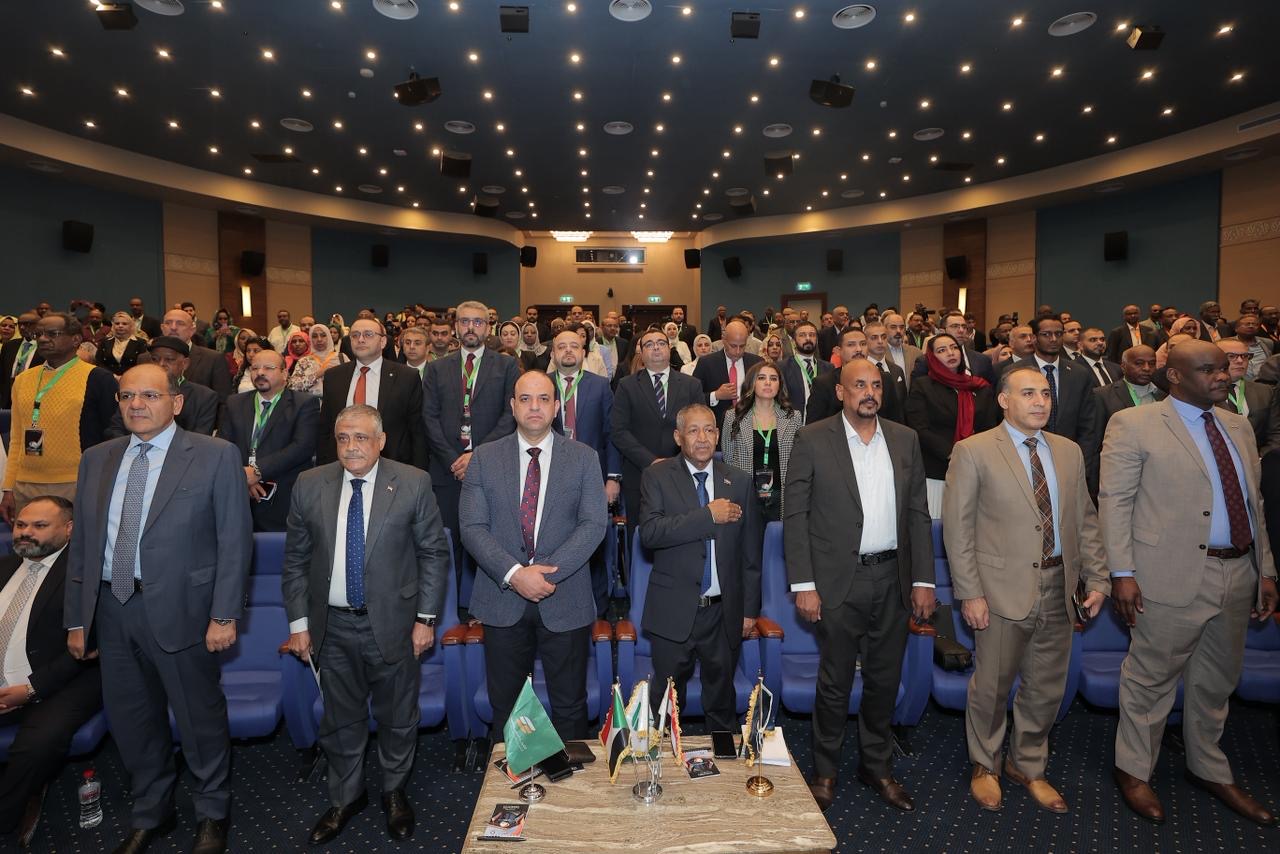
This came during his participation in the third preparatory workshop titled “Banking Integration Between Egypt and Sudan,” held as part of the preparations for the second edition of the Egypt–Sudan Business Forum, amid significant attention and support from the leaderships of both countries.
In his speech, Ambassador Adawi welcomed the participants from Sudanese banks and financial institutions, officials from the Central Bank of Egypt, and the Egyptian–Sudanese Company for Development and Multiple Investments, expressing appreciation to the Egyptian Ministry of Foreign Affairs and the Central Bank of Egypt for their continuous support of the workshop’s success.
Broad Opportunities for Economic Integration
The Ambassador noted that putting the issue of banking integration on the table reflects the extensive opportunities available between Egypt and Sudan. He emphasized that strengthening cooperation in this field would accelerate transactions and increase economic exchange, contributing to a low-cost, efficient investment environment based on automation and simplification within the banking sector.
Extensive Banking Reforms in Sudan
He revealed the ongoing efforts within Sudan to rebuild and restore confidence in the banking sector through direct financial and technical support from government institutions and the Central Bank of Sudan, enabling banks to perform their financial intermediation role efficiently despite post-war challenges.
He also referred to the economic policies and decisions issued by the Transitional Council of Ministers, chaired by Professor Kamal Idris, aimed at opening production markets, combating smuggling, boosting foreign exchange resources, and encouraging banks to strengthen their financial positions and reduce non-performing loans.
A Special Partnership with Egypt
Ambassador Adawi expressed confidence that the workshop would address key issues such as financing mechanisms for productive sectors and infrastructure, and developing financing portfolios for strategic commodities. He stressed that “if partnerships are to be built in this field, they will be with Egypt,” given its strong banking system and successful experience in digital transformation and financial inclusion.
He concluded by expressing his appreciation to all participants, expressing hope that the workshop’s discussions would strengthen banking and economic partnerships between the two peoples and enhance cooperation between institutions in both countries.
Business Council: Egypt and Sudan Stand Before a Historic Opportunity for Comprehensive Banking and Economic Integration
Joseph Makin Iskander, Chairman of the Egyptian–Sudanese Business Council for the Sudanese side, affirmed that Egypt and Sudan stand today before a historic opportunity to achieve comprehensive banking and economic integration. He stressed that the current moment is one of the most important in the history of relations between the two countries—not only politically, but also in terms of rebuilding a joint economic system worthy of the depth of historical and geographical ties.
He made these remarks during his speech at the workshop on banking integration between Egypt and Sudan, held under the patronage of the Sudanese Embassy in Cairo and in cooperation with the Egyptian–Sudanese Company for Development and Multiple Investments, with the participation of representatives of both central banks, the Egyptian Banking Federation, the Sudanese Banking Union, leading business figures, investors, experts, and media professionals.
Iskander noted that the invitation by the Sudanese Embassy and the Egyptian–Sudanese Company reflects a genuine commitment to analyzing the commercial and economic challenges hindering the free flow of trade and investment between the two countries, and working on practical solutions to raise bilateral trade volumes to levels that match the size and potential of both economies—levels that have not yet been reached.
He added that the choice of the theme “Banking Integration Between Egypt and Sudan” comes as a direct response to the conclusions of four previous specialized workshops, all of which demonstrated that the banking sector is the backbone of any economic or commercial integration between the two countries and the primary requirement for increasing trade flows and supporting investment.
Iskander highlighted international experiences demonstrating that integration of banking systems between neighboring countries forms the foundation for expanding trade, supporting entrepreneurship, encouraging foreign direct investment, and enhancing financial stability. He stressed that Egypt and Sudan are more prepared than ever to lead a successful regional model in this field.
He explained that Sudan is currently on the threshold of recovery and reconstruction after an exceptional period, while Egypt possesses an advanced banking infrastructure and extensive institutional experience—making integration not a traditional form of cooperation, but a structural linkage between financial and banking institutions to create a flexible and secure system that supports trade and investment and meets the aspirations of both peoples.
He emphasized that the presence of both central banks and the banking unions in the workshop sends a strong signal of the state-level commitment to supporting integration plans and implementing its recommendations through balanced monetary policies, flexible regulations, and effective incentives.
Iskander also addressed the challenges facing banking integration, including the absence of a joint payment platform, weak use of local currencies, divergent monetary policies, limited digital infrastructure, and delays in linking payment and transfer networks. However, he affirmed his confidence in the ability of institutions and leadership in both countries to overcome these obstacles.
He then outlined ten practical pathways the Business Council intends to work on with the central banks and banking unions, including:
- Establishing a joint technical committee to develop executive instruments for banking integration, with the Council providing all required data and technical support.
- Launching awareness campaigns on banking products that support trade and investment.
- Providing financing guarantees for exporters and importers through joint mechanisms and funds.
- Facilitating trade through digital integration and modern banking services.
- Launching an annual banking forum to monitor progress in integration efforts.
- Creating a bilateral payment system using local currencies to reduce pressure on foreign exchange.
- Establishing branches of Egyptian banks in Sudan and vice versa to serve investors, expatriates, and farmers.
- Digitally linking banking systems to facilitate transfers and ease movement of people and goods.
- Launching joint financing programs for SMEs, particularly in agriculture, industry, and logistics.
- Transferring Egypt’s pioneering experience in financial inclusion to Sudan in cooperation with development institutions.
Iskander stressed that implementing these steps is not an unattainable dream but a practical program that can be realized through continued political will, strengthened coordination between financial institutions, and enabling the private sector to play its vital role.
He added that the Egyptian–Sudanese Business Council will not remain a platform for protocol meetings, but will operate as a permanent channel for dialogue, a hub for joint initiatives, and a bridge linking decision-makers with investors in both countries. The current workshop, he said, crowns a series of previous sessions addressing food industries, pharmaceuticals, reconstruction, and logistical integration.
In closing, Iskander extended his gratitude to the Sudanese Embassy in Cairo, led by Ambassador Imad Al-Din Adawi, and to the Egyptian–Sudanese Company for their tremendous efforts in organizing these important events. He affirmed that the future of cooperation between Egypt and Sudan will be stronger, richer, and broader.
He concluded his remarks saying:
“Long live Egypt and Sudan—sisters forever, united by affection, development