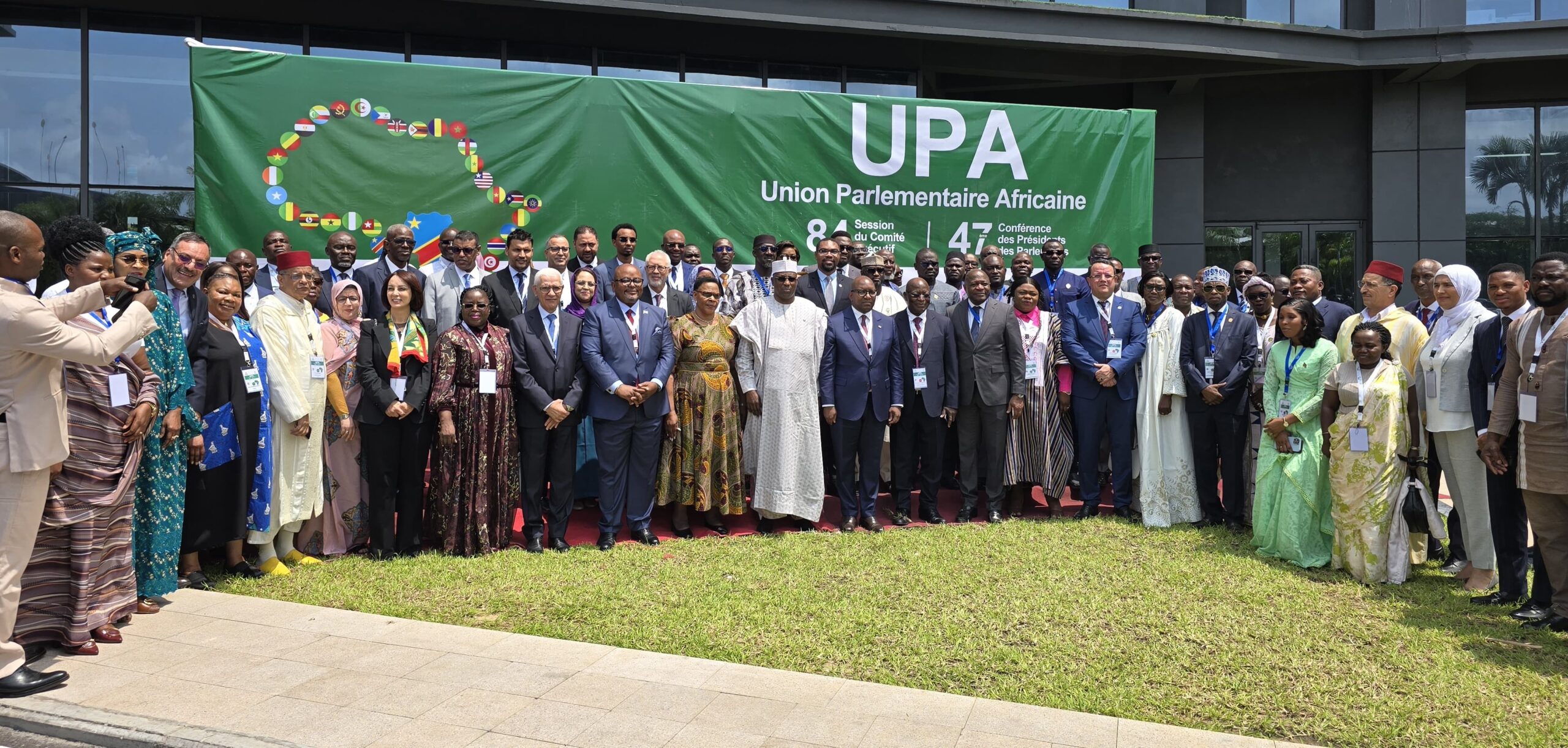
The 84th session of the Executive Committee of the African Parliamentary Union (APU) was inaugurated on Tuesday in the Congolese capital, Kinshasa, with the participation of delegations from several member states, including the Kingdom of Morocco.
Morocco is represented by a high-level parliamentary delegation led by the Speaker of the House of Representatives, Rachid Talbi El Alami, accompanied by members of the national branch of the APU from both the House of Representatives and the House of Councillors.
The session’s agenda includes several key issues, notably strengthening national sovereignty in African states to achieve sustainable development, and addressing challenges related to energy transition and the development of renewable energies. During the opening session, the Speaker of the National Assembly of the Democratic Republic of Congo, Émé Bouji Sangara, praised the relevance of the topics selected for this edition and their importance in enhancing African parliamentary cooperation.
The President of the National Assembly of Chad and Chair of the APU Executive Committee, Ali Kolotou Chaïmi, highlighted the significance of this session in preparing the Union’s work program and determining its funding mechanisms, in addition to setting the agenda for the 85th session.
The meetings are expected to host around 200 participants, including African parliamentary speakers, Executive Committee members, observers, diplomats, and various officials, who will discuss the Union’s 2026 work mechanisms and follow up on previous decisions. The session will also witness the election of new committee members and the handover of the APU’s rotating presidency to the Democratic Republic of Congo for the 2025–2027 term.
The program additionally includes a meeting organized by the Women Parliamentarians Committee on “Digital Governance for Women’s Rights,” alongside the election of a new bureau.
The African Parliamentary Union, established in 1976, aims to strengthen dialogue and cooperation among African national parliaments and address major continental challenges.