
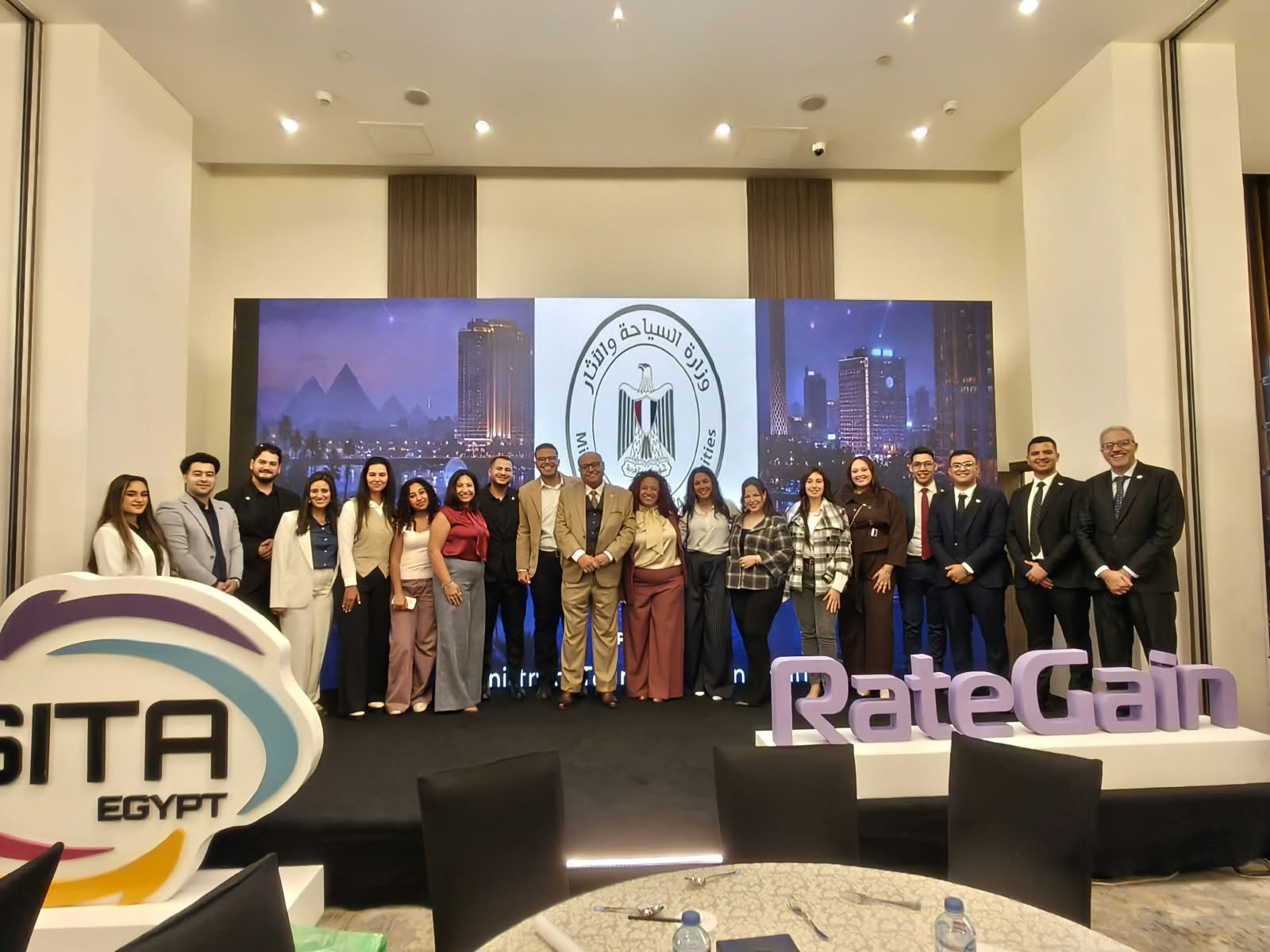
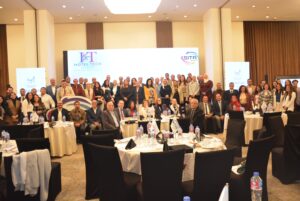
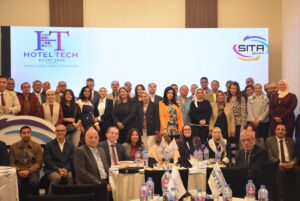
The fifth edition of Hotel Tech Egypt 2026 has successfully concluded in Cairo under the patronage of the Ministry of Tourism and Antiquities, the Egyptian Tourism Promotion Authority, and the Egyptian Hotel Association, under the theme “Where Tourism Meets Technology.”
The exhibition brought together technology providers, digital solutions companies, industry experts, decision-makers, and representatives from the travel, tourism, and hospitality sectors to showcase the latest innovations and technological developments shaping the future of Egypt’s tourism industry.
The event focused on the growing role of artificial intelligence (AI) and digital transformation in hospitality, highlighting innovative solutions designed to improve hotel operations, enhance guest experiences, increase operational efficiency, and strengthen the competitiveness of tourism establishments.
The exhibition also featured the latest developments in hotel booking and distribution systems, electronic payment solutions, and hotel management technologies, alongside discussions on how digital innovation can support the sustainable growth of the hospitality sector.
Artificial Intelligence Drives Digital Transformation in the Hospitality Industry
Artificial intelligence was one of the main highlights of Hotel Tech Egypt 2026, with exhibitors presenting advanced AI-powered solutions designed to transform hotel services and operations.
These technologies included AI assistants operating through instant messaging applications to provide 24/7 guest support, immersive digital experiences, engineering and operational efficiency solutions, and automation technologies aimed at improving hotel management.
Discussions also focused on the evolution of online booking and distribution systems, particularly the transition toward integrated smart platforms that allow hotels to manage multiple booking channels through a single dashboard.
Participants explored how artificial intelligence can increase direct bookings, optimize pricing strategies, improve revenue management, and reduce hotels’ dependence on intermediaries and external booking platforms.
A dedicated session examined key AI and cybersecurity trends expected to shape the hospitality industry through 2030, focusing on customer data protection, digital service development, and operational efficiency.
Electronic Payments and Digital Invoicing Transform Hotel Operations
The exhibition also addressed the future of financial services and electronic payment solutions in the tourism and hospitality industries.
Discussions highlighted integrated payment technologies covering the entire customer journey, from the initial booking process to final payment completion.
These solutions included integrating bank payment gateways with Egypt’s electronic invoicing and electronic receipt systems linked to the Egyptian Tax Authority.
The integration is designed to support transparency, regulatory compliance, and faster financial transactions for hotels and hospitality businesses.
Other key topics included smart operating systems, cloud-based technologies, the Internet of Things (IoT), data management, customer loyalty programmes, sustainable technology, energy and water consumption monitoring, and paperless operations.
Egyptian Technology Companies Expand Their International Presence
Commenting on the exhibition, Conference Chairman Eng. Adel Abdel Masih, an IT and digital transformation consultant, highlighted the significant progress achieved by Egypt’s tourism technology sector.
He pointed to an important international achievement by an Egyptian company specializing in IT solutions for the travel and hospitality industries, which obtained two internationally recognized ISO certifications this year.
The certifications include:
-
- ISO/IEC 27001: Information Security Management.
-
- ISO 22301: Business Continuity Management.
Abdel Masih also revealed that the company had signed international agreements to provide artificial intelligence solutions in Saudi Arabia and the United Arab Emirates.
These developments reflect the expanding international presence of Egyptian technology providers and their growing role in delivering digital solutions to regional tourism and hospitality markets.
Channel Manager Systems Support Hotel Bookings and Revenue Growth
Abdel Masih highlighted the growing importance of digital technologies in providing advanced solutions for tourism and hospitality businesses, particularly the Channel Manager system.
The technology enables hotels to manage their online sales and distribution channels by connecting their booking systems with online travel agencies and other digital distribution platforms.
Through a centralized dashboard, hotels can manage room availability and sales across multiple online channels, helping increase booking volumes, improve distribution efficiency, and enhance average daily room rates.
He explained that Channel Manager solutions gained considerable momentum during the COVID-19 pandemic and have since been adopted by a large number of Egyptian hotels, particularly in Cairo and Hurghada.
According to Abdel Masih, approximately 300 hotels in Egypt and 2,700 hotels worldwide currently use these digital tools.
He added that Channel Manager systems can be integrated with hotels’ existing digital operating infrastructure, functioning as an additional sales channel that creates new business opportunities without replacing their current systems.
Digital Payments and Virtual Reality Enhance Hotel Marketing
Abdel Masih also revealed that payment solutions have been integrated with all Egyptian banks, providing secure payment gateways that facilitate fast and reliable financial transactions between customers and hotels.
He further highlighted the growing use of Virtual Reality (VR) technology in hotel marketing, explaining that these solutions enable hotels to showcase their facilities through advanced and visually engaging digital experiences.
Virtual reality allows potential guests to explore hotel properties and their facilities before making booking decisions, offering an interactive approach to hotel promotion and digital marketing.
According to Abdel Masih, these technologies are already being used in marketing campaigns with several local hotel chains in Sharm El Sheikh and Hurghada, strengthening their digital presence and expanding their marketing capabilities.
Tourism and Hospitality Leaders Highlight the Importance of Digital Innovation
The conference featured a number of prominent speakers and industry representatives, including:
-
- Rami Fayez, Board Member of the Egyptian Hotel Association and Head of the Hotel Division representing one-, two-, and three-star hotels.
-
- Wael Abou El-Saoud, Treasurer of the Egyptian Hotel Association and member of the Egyptian-German Chamber of Commerce.
-
- Bassem Lotfy, Head of Business Development at Fawry for Banking Technology and Electronic Payments.
-
- Dr. Mohamed Hamed, Information Systems and Digital Transformation Consultant.
Speakers emphasized the importance of adopting digital technologies to increase direct hotel bookings, improve operational performance, and support growth in international tourist arrivals to Egypt.
The conference also received support from several organizations, including the Preservation of Cultural Tourism Association (PCTA).
Hotel Tech Egypt 2026 Reinforces the Future of Digital Tourism in Egypt
The fifth edition of Hotel Tech Egypt 2026 reaffirmed the growing importance of artificial intelligence, digital transformation, and integrated technology solutions in shaping the future of Egypt’s tourism and hospitality industry.
The event highlighted how technological innovation can improve guest experiences, streamline hotel management, enhance booking and payment systems, and strengthen the competitiveness of Egyptian hospitality establishments.
It also underscored the expanding role of Egyptian technology companies in providing innovative solutions for local and international tourism markets, supporting the industry’s transition toward a more connected, efficient, and digitally advanced future.