From Egypt to Mangliawan: The Journey of Egyptian Students in a Climate Mission and Community Development Program in Indonesia
(Climate Change and Tourism Education)
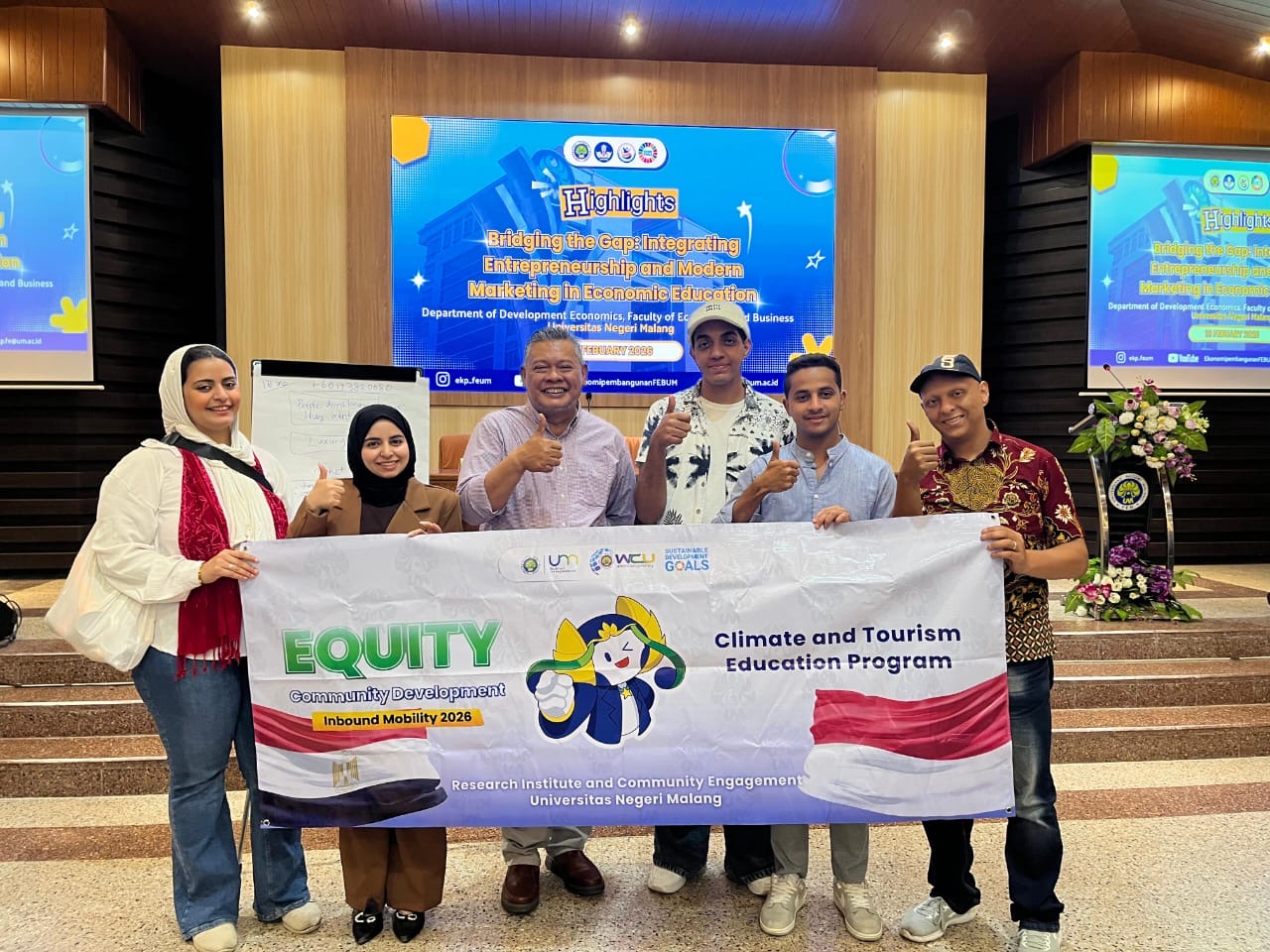
Students from several prominent universities in Egypt demonstrated an active role in global educational diplomacy through a Community Development program organized by Universitas Negeri Malang( (UM) as part of the EQUITY World Class University (WCU) program on February 10–15 in Mangliawan Village, Indonesia.
The participants came from Ain Shams University, Arab Academy for Science, Technology and Maritime Transport, Cairo University, and HISS Institute. Notably, the program was fully organized and implemented by the students themselves without supervision from Egyptian lecturers, reflecting the independence and leadership of the younger Egyptian generation on the international stage.
In collaboration with students from Universitas Negeri Malang (UM) as student buddies and volunteers, the initiative became a concrete implementation of SDG 17 (Partnerships for the Goals), strengthening cross-national partnerships in education and climate change issues.
Over six days, the Egyptian students were directly involved in various community activities. At the early childhood education level (kindergarten) in Mangliawan Village, they conducted interactive learning sessions that promoted environmental awareness through educational games and creative approaches. At the junior high school level, the students shared insights on climate change and tourism education, encouraging pupils to understand the impact of climate change on the tourism sector and environmental sustainability.
At a higher level, discussions continued in a Forum Group Discussion (FGD) with students from YIM Malaysia and UM Indonesia, addressing climate threats and potential disasters at both local and global levels. Together, they explored possible solutions and shared perspectives. This discussion reflected a commitment to SDG 13 (Climate Action) by enhancing climate literacy and fostering constructive international dialogue.
In addition to educational activities, the students conducted industrial visits to learn about local economic practices in Mangliawan Village and explore opportunities for sustainable tourism development. These activities aligned with SDG 8 (Decent Work and Economic Growth), SDG 9 (Industry, Innovation and Infrastructure), and SDG 11 (Sustainable Cities and Communities), emphasizing the importance of environmentally responsible economic growth.
The response from the Mangliawan Village community was overwhelmingly positive. This visit marked the village’s first experience hosting students from Egypt. The warmth of the local residents was evident in their active involvement, including providing comfortable homestays, logistical support, and meals throughout the program. “We cooked for them ourselves,” said one local mother enthusiastically, explaining that the dishes included traditional Indonesian cuisine and snacks. This cross-cultural interaction not only enriched the students’ experiences but also strengthened international bonds through a community-based approach.
The program demonstrates that Egyptian students are not merely participants in international mobility initiatives, but active contributors to the global sustainable development agenda. Through collaboration, intercultural dialogue, and tangible action, they proved that climate change and sustainable education are not merely academic discourse, but a shared responsibility of the world’s younger generation.
The partnership established between Egyptian and Indonesian students, particularly with Universitas Negeri Malang, serves as a concrete reflection of SDG 17—showing that sustainable development goals can be achieved through equal, inclusive, and sustainable global cooperation.